

The Netherlands has long stood out as one of the European countries where democratic culture is deeply institutionalized. Pluralism, consensus-building, and the rule of law form the foundation of its political system, allowing diverse ideological perspectives to be represented within legitimate political frameworks. This structure manifests itself not only in electoral outcomes but also throughout the political process, where rational negotiation and balance remain central principles.
The country’s cosmopolitan social fabric constitutes an integral component of this democratic culture. Dutch society, shaped by multiple ethnic backgrounds, belief systems, and lifestyles, traditionally approaches diversity not as a threat but as a political and cultural asset. This perspective helps limit social polarization even during election periods and enables public debate to remain largely grounded in rational and institutional discourse.
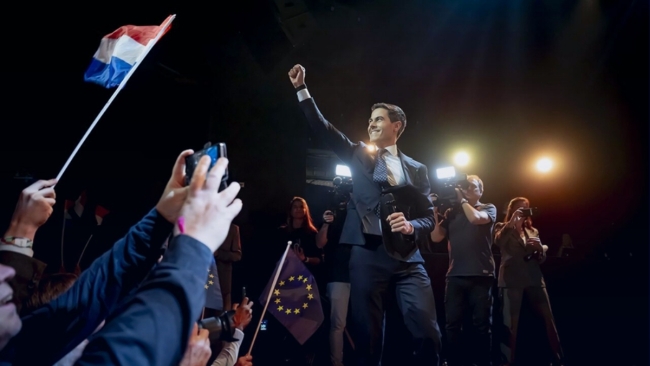
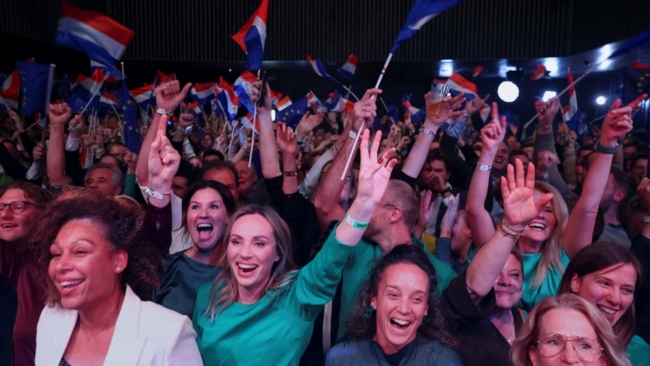
By 2026, this democratic and cosmopolitan character was clearly reflected at the ballot box. Contrary to most pre-election expectations, Democrats 66 (D66), a party positioned at the political center, emerged as the most influential actor in the political landscape. This unexpected outcome demonstrated that voters favored institutional experience, democratic commitment, and the capacity for compromise over reactive or populist appeals.
The rise of D66 signaled a contraction of the discursive space occupied by the far right and a renewed dominance of centrist political rationality in Dutch politics. The electorate chose democratic continuity over radical rupture, and pluralistic governance over exclusionary politics—once again underscoring the resilience of democracy in the Netherlands.

Coalition Formation: D66–VVD–CDA
Following the elections, the emerging political landscape paved the way for a center-right coalition in Dutch politics. In this context, Democrats 66 (D66) became the natural leader of coalition negotiations, both due to its electoral performance and its central political positioning. D66’s leadership enabled the reconstruction of a government model grounded in compromise rather than ideological rigidity.
The other two pillars of the coalition—People's Party for Freedom and Democracy (VVD) and Christian Democratic Appeal (CDA)—complemented this structure through their institutional experience in economic governance, public administration, and social balance. Despite ideological differences, the cooperation among these three parties reflects the continued relevance of centrist political rationality in the Netherlands.
This coalition represents not merely a numerical parliamentary majority, but a broader commitment to democratic legitimacy, institutional stability, and social consensus. The exclusion of far-right parties from government underscores the coalition’s reliance on an inclusive yet clearly bounded democratic framework. In the Netherlands of 2026, political power is thus derived not from exclusionary rhetoric, but from responsibility anchored in the democratic center.
Although the current seat distribution makes it difficult for the D66–VVD–CDA coalition to secure an absolute parliamentary majority on its own, the Dutch political tradition offers flexible and functional mechanisms to address such situations. Conditional or issue-based support from smaller parties provides a sufficient foundation for the government to carry out its legislative agenda. This dynamic once again illustrates that political consensus, rather than mere numerical dominance, remains the defining feature of Dutch democracy.
Within this framework, the coalition represents not merely an arithmetic arrangement but a normative political choice. The center-right alliance has made it a strategic priority to steer the Netherlands away from the influence of far-right rhetoric and, in particular, from the exclusionary political line associated with Geert Wilders. This approach reflects a commitment to democratic stability and social cohesion over short-term political gains.
At the same time, this political orientation sends a clear message regarding the Netherlands’ position within the European Union. By limiting the influence of the far right, the country is repositioned as a centrist, cooperative, and constructive actor within the EU. In the Netherlands of 2026, the core of political debate thus shifts away from Euroscepticism and inward-looking populism toward a rational, institutional, and Europe-oriented vision of governance.
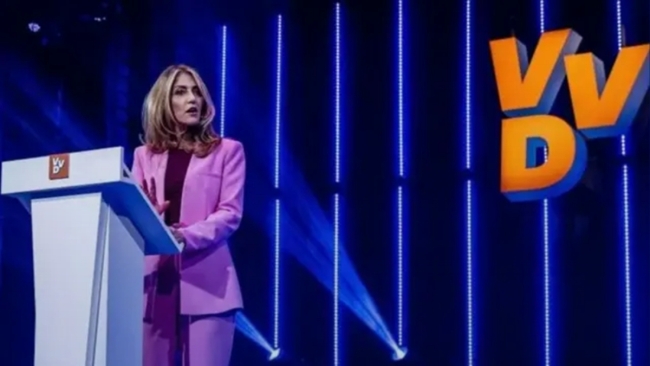
Dilan Yeşilgöz-Zegerius Factor: The Integrative Force of the Center-Right Coalition
Dilan Yeşilgöz’s position in Dutch politics is often subject to superficial interpretations that attempt to associate her with far-right politics. Such readings, however, fail to reflect political reality. Dilan Yeşilgöz-Zegerius is not positioned within a racist or exclusionary ideological framework; rather, her political stance centers on the rule of law, public order, and the protection of democratic institutions. This clearly distinguishes her from populist far-right figures.
The political line represented by Yeşilgöz prioritizes institutional capacity over ideological polarization, particularly on sensitive issues such as security and migration. Rooted in the VVD tradition, this approach aims not to deepen identity-based divisions but to strengthen state authority and maintain social order. Consequently, her political profile should be understood as a contemporary expression of center-right rationality rather than an extension of exclusionary politics.
Within the D66-led center-right coalition, Yeşilgöz’s role is not confrontational but complementary. Acting as a bridge between the VVD’s liberal-economic perspective and D66’s social-liberal orientation, she contributes to stabilizing the coalition’s internal balance. This demonstrates that the alliance is not ideologically fragmented but instead structured around a multi-layered yet coherent political vision.
Moreover, Yeşilgöz’s presence undermines the far right’s claim to monopolize debates on security and migration. By demonstrating that these issues can be addressed within the democratic center, her political stance directly contributes to the marginalization of the Wilders-style political line. As a result, the center-right coalition presents a model of governance that is both inclusive and firm.
In conclusion, in the Netherlands of 2026, Dilan Yeşilgöz emerges not as a weak link but as a balancing and integrative actor within the center-right coalition. Her role strengthens the distinction between the democratic center and the far right, reinforcing the resilience of Dutch democracy.
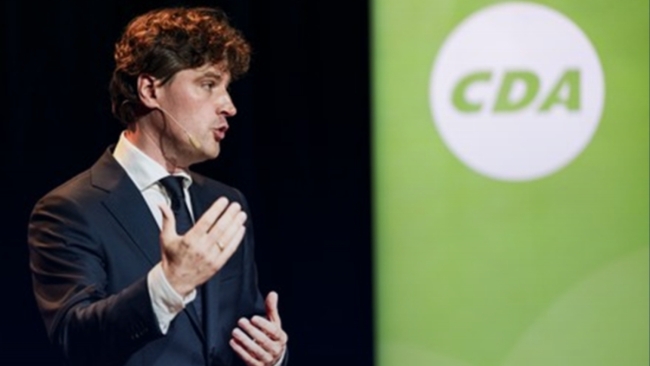
The leadership of the CDA represents a crucial and stabilizing pillar within the center-right coalition. Henri Bontenbal stands out in Dutch politics as a figure associated with moderation, institutional responsibility, and consensus-oriented leadership rather than ideological confrontation. This approach positions the CDA as a key actor in reinforcing the coalition’s political legitimacy and social balance.
Bontenbal’s political discourse avoids both populist impulses and exclusionary identity politics. Instead, his leadership emphasizes social responsibility, solidarity, and ethical governance—core elements of the CDA’s historical political tradition. In this sense, the party contributes not only parliamentary support but also normative depth to the coalition framework.
Between D66’s social-liberal vision and VVD’s liberal-economic orientation, the CDA under Bontenbal plays a balancing and moderating role. This function enhances the coalition’s perception as legitimate and inclusive among broader segments of the electorate. Particularly for centrist and undecided voters, the CDA’s presence expands the coalition’s societal appeal.
In conclusion, CDA leadership emerges as a quiet yet effective component of the center-right coalition in the Netherlands of 2026. By maintaining a value-based, conciliatory, and institutionally grounded political stance, the CDA helps prevent the normalization of far-right politics while strengthening the democratic center of Dutch governance.
Conclusion: Center-Right Governance in the Netherlands in 2026
As of 2026, the center-right governance framework emerging in the Netherlands can be interpreted as an effort to consolidate democratic decision-making through institutional continuity and policy-oriented cooperation. Rather than representing a sharp ideological shift, this configuration reflects an attempt to balance electoral legitimacy with established norms of consensus-based governance that have historically characterized Dutch politics.
One of the key policy areas facing the center-right coalition concerns the housing shortage, which has developed into a structural challenge affecting economic stability and social cohesion. The coalition’s approach emphasizes coordinated public planning, cooperation with local authorities, and targeted investments in housing supply. This strategy suggests a preference for incremental and administratively grounded solutions over ideologically driven interventions.
In the economic domain, governance priorities appear to focus on maintaining fiscal stability while addressing pressures related to inflation, labor market dynamics, and cost-of-living concerns. The policy orientation favors long-term economic resilience, productivity growth, and institutional credibility, reflecting continuity with established economic governance practices in the Netherlands.
Security policy constitutes another central dimension of the coalition’s agenda. Rather than framing security as an exceptional or polarizing issue, it is addressed as a routine component of democratic governance linked to public order and institutional capacity. This framing situates security policy within mainstream political discourse rather than at the margins of ideological contestation.
Across these policy fields, the defining characteristic of the center-right coalition lies in its reliance on parliamentary negotiation and cooperation beyond strict majority arithmetic. Given the fragmented nature of the legislature, governance depends on issue-based support from smaller parties, reinforcing the role of deliberation and compromise within the parliamentary system.
This governing configuration also carries implications for the Netherlands’ position within the European Union. A centrist and coalition-based approach to domestic politics facilitates policy alignment with broader European frameworks and supports a cooperative stance in EU-level decision-making processes.
In sum, center-right governance in the Netherlands in 2026 can be understood as a case of democratic continuity shaped by coalition politics, institutional moderation, and policy pragmatism. The emphasis on housing, economic management, and security illustrates how structural challenges are addressed through negotiated governance rather than ideological polarization, contributing to the stability of the Dutch democratic system.